
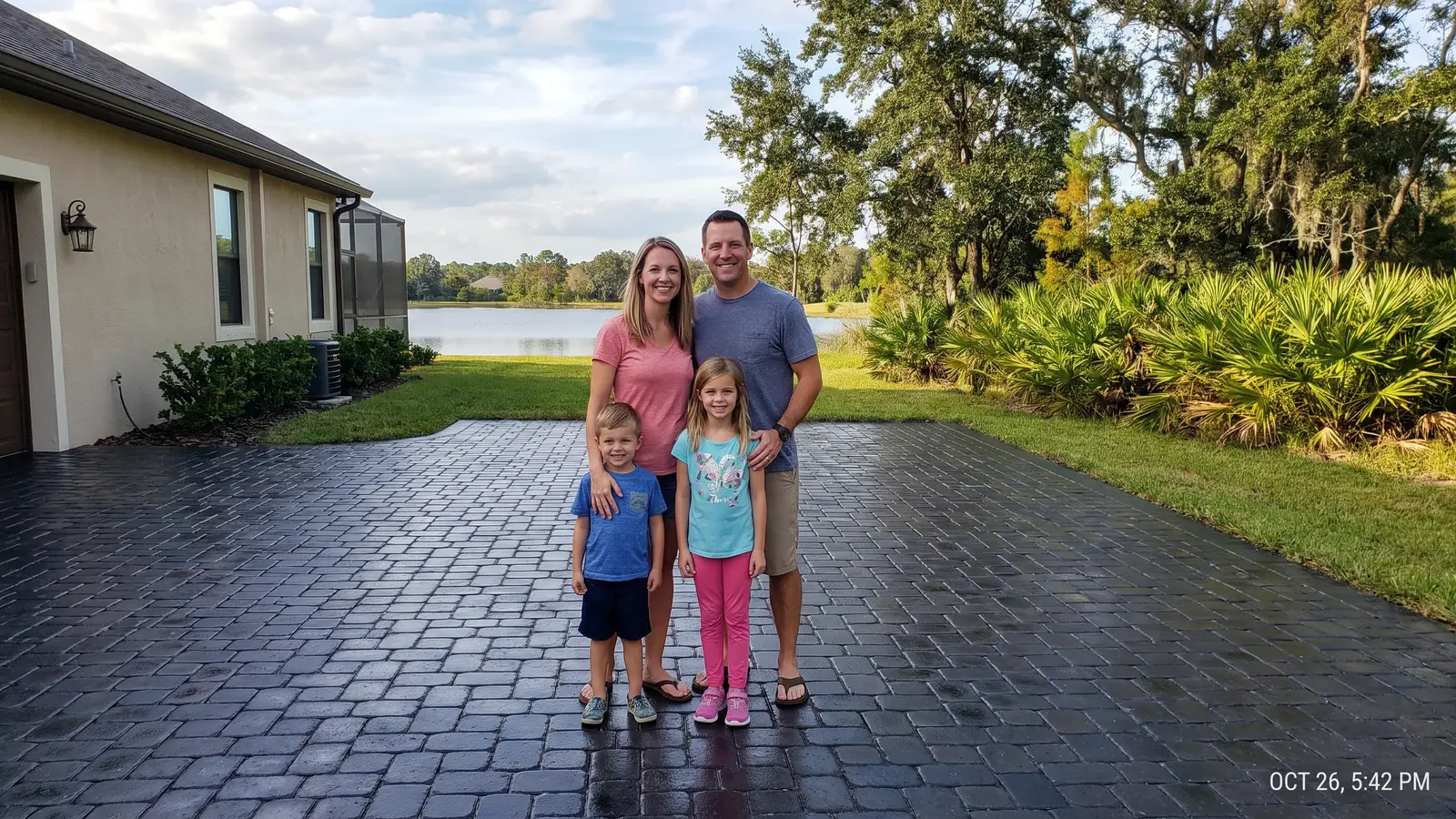
Paver sealing for Whitehouse homes
Paver Sealing in Whitehouse, FL
Sandy ground empties joints in Whitehouse, so call (904) 736-4863 for a free estimate and a plan to refill them.
- Brings out deeper paver color
- Fresh joint sand helps lock pavers in place
- Gives weeds less room to grow
- Makes the surface easier to keep clean
- Free estimate, no obligation
Request a Free Estimate
Free, no obligation.
Fast, careful paver sealing in Whitehouse
Paver sealing is available across Whitehouse, from the homes near Whitehouse Park to the roads that run out toward Camp Milton. Driveways, walkways, patios and pool decks can all be washed, re-sanded and sealed by a local contractor, with a free estimate up front. If you ask for a free estimate, expect a reply inside 1 business day, usually much sooner.
On a rural lot, a paver driveway can be a long one, which means a lot of surface to keep clean. Weeds in the joints, orange stains and faded color all show from the road. A wash, new sand and a fresh coat tidy the whole run, so call (904) 736-4863 and describe what you see.
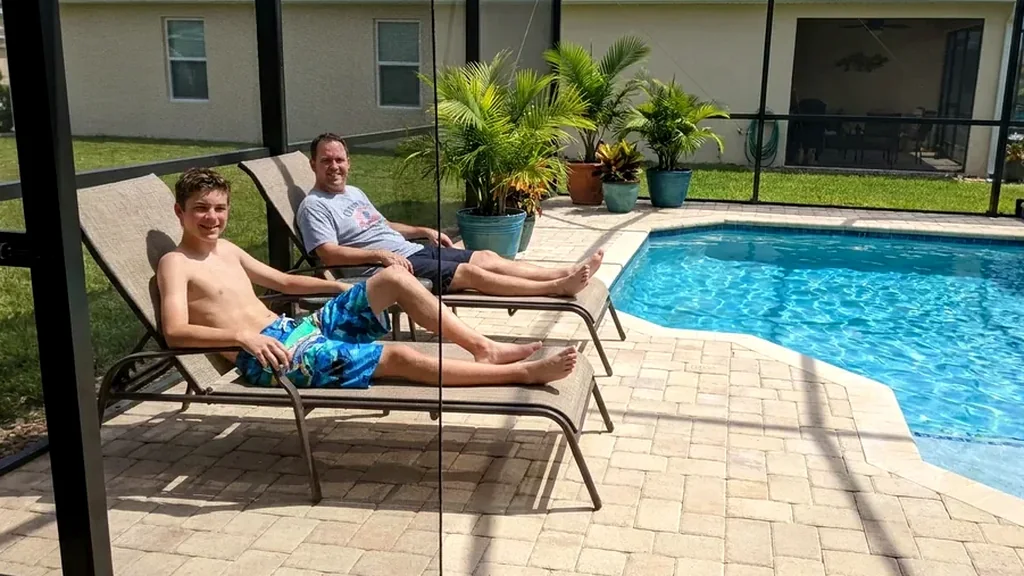
Why hire a local paver sealing contractor in Whitehouse?
Whitehouse homeowners choose a local paver contractor because large lots, sandy ground and the drive out to the job all affect how it is planned. To get a plan for your lot, ask for a free estimate.
Measured, free estimate
The contractor measures your Whitehouse pavers and quotes a price before anything is agreed. There is no obligation, and the estimate covers every surface you list.
Bigger areas, better rate
A Jacksonville guide says larger projects cost less per square foot because setup is spread over more surface. Ask about that for a long drive.
A range to check against
Regional prices run $1.75 to $3.25 per square foot to clean, sand and seal, per companies that publish them. Compare any Whitehouse bid to it.
A reply within a day
Expect to hear back within 1 business day, usually much sooner. You choose the date and the finish.
Get Your Free Estimate in Whitehouse
Tell us about your pavers in Whitehouse.
Free, no obligation
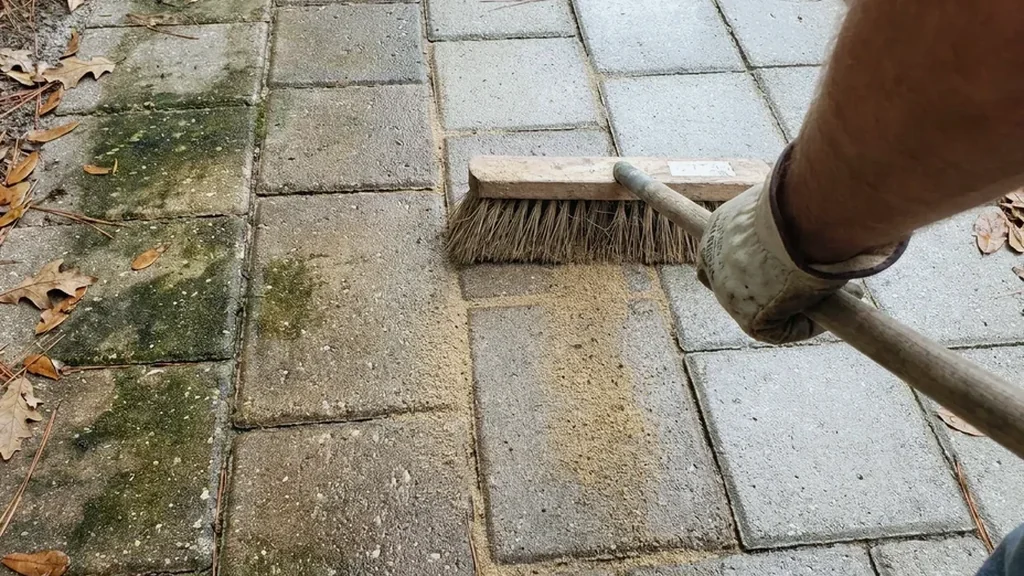
What paver problems show up most in Whitehouse?
Sand under the pavers that softens when wet
The USDA describes the Myakka series as a poorly drained sand of Florida flatwoods, with a water table within 18 inches of the surface for one to four months in most years. That is a regional description, not a lot survey. It shows why sand-based beds can soften in long wet stretches, and a soft bed is how pavers sink. Sinking pavers and washed-out joints lead one local company's list of failures. If your driveway has a low spot that holds water after rain, that is worth pointing out early.
Joint sand that rinses away
Rain totals about 52 inches a year in Jacksonville, with most of it falling May through September in short, hard storms. Lost joint sand lets joints widen, and soil and weeds move in. A long driveway has a lot of joint to lose. Refilling the sand comes before any coat, and a sealed surface helps the new sand stay where it was put. Ask the contractor what sand and what depth the quote assumes.
Orange rust spots from irrigation
Most Florida well water is high in iron, UF/IFAS says, and orange stains often show up where iron-heavy irrigation water lands. If your Whitehouse sprinklers run off a well, look along the edge of the drive and walkway for arcs. Sealer would lock rust in, so rust treatment happens first. Some marks may not come out fully, and the contractor should say so before the work starts. Moving a sprinkler head away from the pavers keeps new arcs from forming.
Green film where damp lingers
The Royal Horticultural Society says algae thrive in wet conditions, and growth may be faster in shady areas with poor air circulation. On a Whitehouse lot, that points to the north side of the house, a screened patio or a spot behind a fence. Pavers there stay damp longer after rain. The green comes back first in those corners. A wash clears it, and a coat makes the next one easier, though shade will keep pushing growth back over time.
Pavers added to older homes
Many Whitehouse homes were built between 1970 and 1999, according to NeighborhoodScout, and most are owner occupied. A paver driveway or patio on a house that age is often an add-on, so its age and sealer history can differ from the house. A past coat of unknown type narrows the choices, because water-based sealer cannot go over solvent-based sealer. Tell the contractor roughly when the pavers went in. A guess to the nearest few years is enough to start.
Where in Whitehouse can paver sealing be done?
Across the whole community, which sits on Jacksonville's Westside in Duval County at about 85 feet above sea level. ZIP 32220 counted 13,037 residents and 5,309 housing units in the 2020 Census. NeighborhoodScout classes Whitehouse as rural by density, with mostly single-family homes. Tell the contractor your road when you ask for a free estimate.
Whitehouse Park, at 11100 General Avenue, covers 17.96 acres with lighted ball fields and courts, and Whitehouse Elementary sits next to it. The school opened in 1926 and added eighteen classrooms between 1955 and 1968. Homes around a park and a school come in all lot sizes, so describe your driveway when you call (904) 736-4863.
Wikipedia says the Westside holds populated areas and a vast tract of undeveloped land. Out here, the drive to your lot can be longer than in town. Give an accurate address, and mention any gate or long driveway, when you ask for a free estimate. That lets the contractor plan the route and the time for the visit.
What does paver sealing cost in Whitehouse?
Typical published pricing in Northeast Florida is $1.75 to $3.25 per square foot to clean, sand and seal. Whitehouse jobs tend to be large, and a Jacksonville guide says bigger projects cost less per foot because setup is spread over more surface. Failed old sealer and empty joints add work. To price a long drive and a walk, ask for a free estimate, and the estimate is free.
Several things push a Whitehouse quote up or down. Gates, stairs and tight side yards add prep time, and rust marks and weeds in the joints need treatment before sealing, while stripping a failed coat costs extra. A quote that lists them is easier to compare. Call (904) 736-4863 and describe yours so the estimate reflects them.
| Paved area | Typical example | Clean, sand and seal |
|---|---|---|
| 300 sq ft | Small patio or walkway | $525 to $975 |
| 600 sq ft | Two car driveway | $1,050 to $1,950 |
| 1,000 sq ft | Large driveway or pool deck | $1,750 to $3,250 |
| 1,500 sq ft | Driveway plus pool deck | $2,625 to $4,875 |
Math based on the $1.75 to $3.25 per square foot that Northeast Florida paver companies publish. Your contractor sets the actual price after seeing the surface. Repairs, leveling and stripping failed sealer are usually extra.
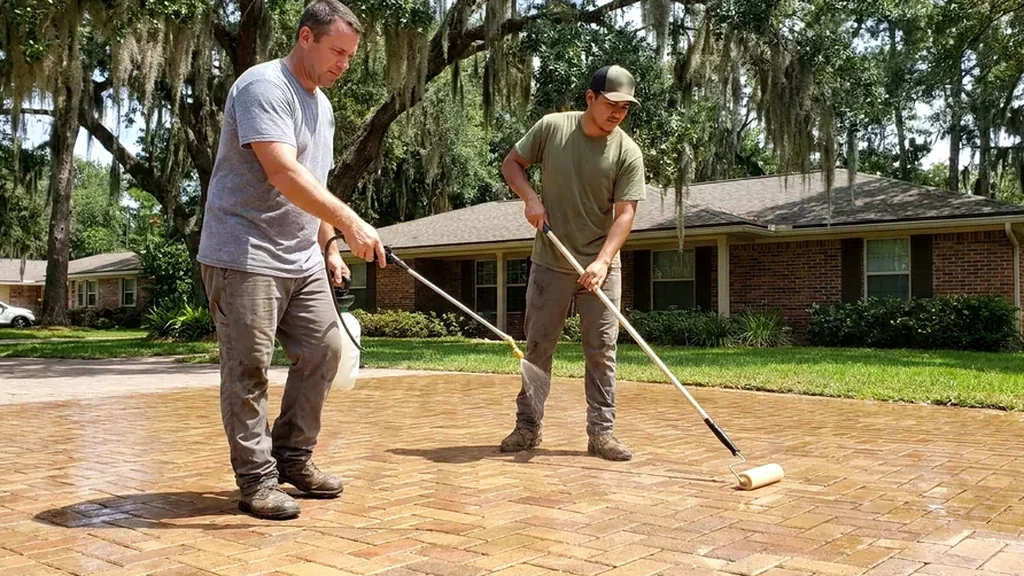
How does a paver sealing job work in Whitehouse?
Measure and read the ground
The contractor measures the area, checks how water drains off it and looks for soft or sunken spots. Sealing preserves any sunken or lifted section, so those get reset first. A weak or poorly compacted base is a leading cause of sinking, according to one paver maker. The contractor writes down what is found, so the quote matches the real work.
Wash and treat stains
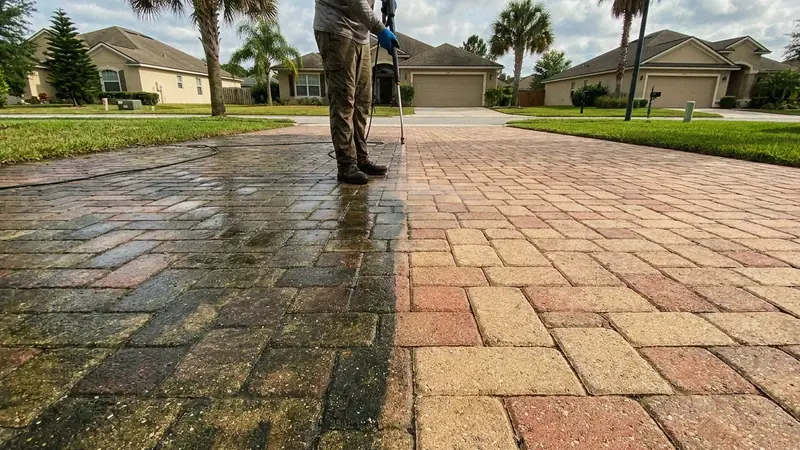
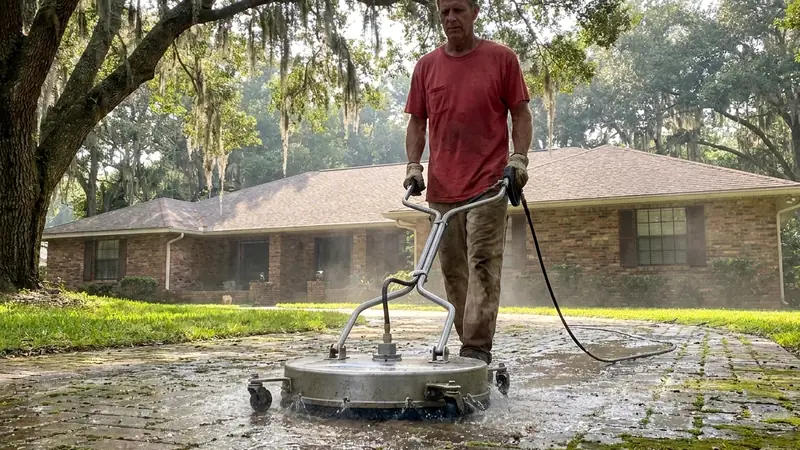
The wash removes green film, dirt and weeds in the joints. Rust spots from irrigation get treated before any coat, since sealer would hold them in place. High pressure can loosen joints and dislodge sand, so a careful contractor keeps it controlled. A few oil or rust marks can stay behind even after treatment. Rinse water is steered away from plants, siding and any well house that sits close.
Sand goes back in the joints
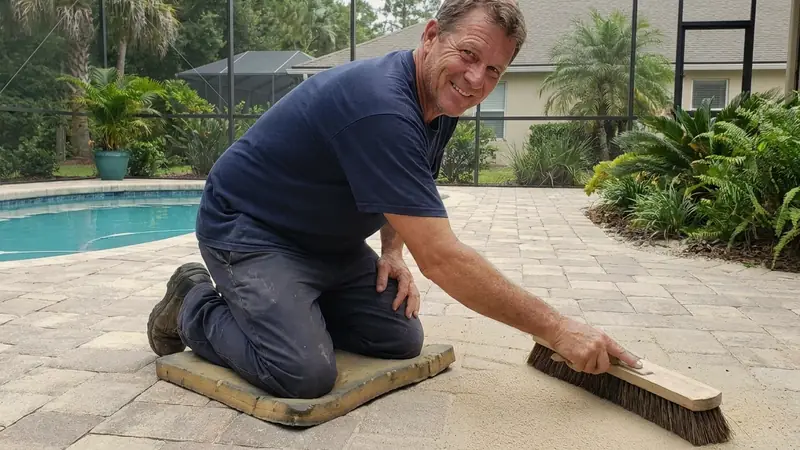
The wash takes joint sand with it, so sand is put back before any coat. Lost joint sand lets joints widen and soil in, which feeds weeds. On a long driveway, this step can use a lot of sand. A final sweep leaves the surface clean once the joints are full. The finished joints should look even from the road.
Dry, then check the forecast
A Jacksonville page says sealing should wait until pavers are fully dry, typically 24 to 48 hours after cleaning. Summer storms arrive fast, so the contractor watches the forecast. Sealing damp pavers can turn a coat white or blotchy. Waiting a day beats redoing the work. A long driveway can dry unevenly, so the contractor checks the shady end last.
Spray, back-roll and stay off
Sealer is typically sprayed and back-rolled so it works into the joints. Feet are fine within a few hours, but cars should stay off for about a day. Later, water that soaks in instead of beading shows the coat has worn. Ask for the product name in writing so a later coat can match. Keep sprinklers pointed away from the fresh coat until it has cured.
Complete paver services in Whitehouse
A Whitehouse job runs in four parts: wash, re-sand, dry and seal. On a long driveway, prep takes more time than the sealing, since one Jacksonville company spends about 2 to 3 hours of prep for every hour of sealing. Sealer goes on last, and on large Whitehouse lots the order is the same as on a small one, only longer. For an honest time on your lot, call (904) 736-4863.
Driveways carry the tire traffic and show weeds first, walkways pick up dirt where beds and lawn meet them, and patios and pool decks hold water longest. Each one gets washed to suit its wear, and sealed once it is dry. Tell the contractor which areas you want done when you ask for a free estimate.
An old coat decides which sealer can go on, since water-based sealer cannot go over solvent-based sealer. Matte keeps the natural look and hides scuffs longer, while a wet look deepens color but marks up sooner. Pick the finish you can live with, not the one that shines most, and let the contractor explain the product. To talk it through, call (904) 736-4863.
Jacksonville gets most of its rain from May to September, often in short, hard storms. Plan on a dry spell of 24 to 48 hours after cleaning before any sealer goes on. Where water lingers, the contractor may wait a day. For a date that fits your week, ask for a free estimate.
Questions to ask before you hire
- My HOA approved a certain look. Can the finish match it?
- If a storm rolls in after the job, does the sealer get redone?
- After the wash, what tells you the pavers are dry enough to seal?
- My irrigation water leaves orange stains. Can those come out first?
- Is the sand between the pavers polymeric, and when does it harden?
- Will the written estimate name the sealer and the square footage?
- Where the pavers have sunk, do they get lifted and leveled first?
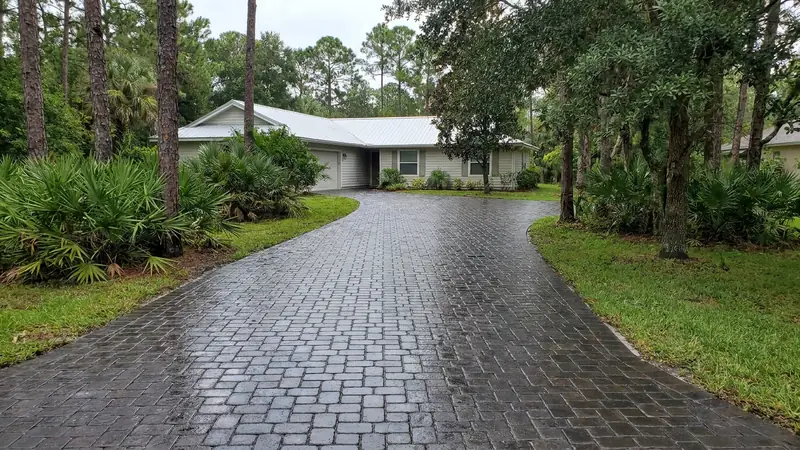
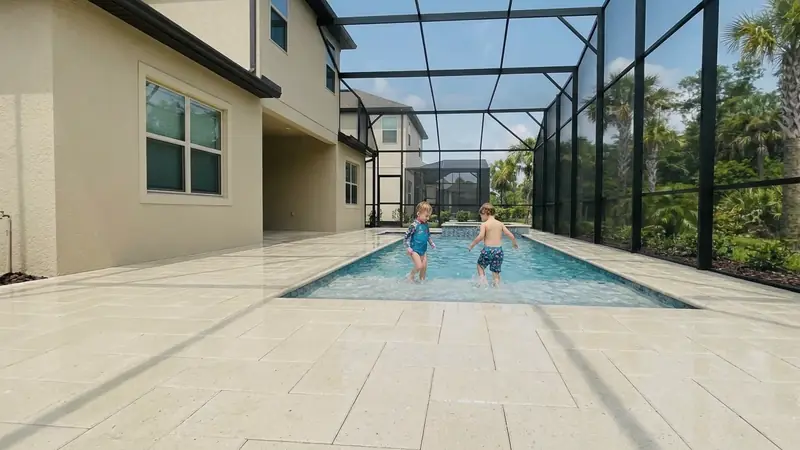
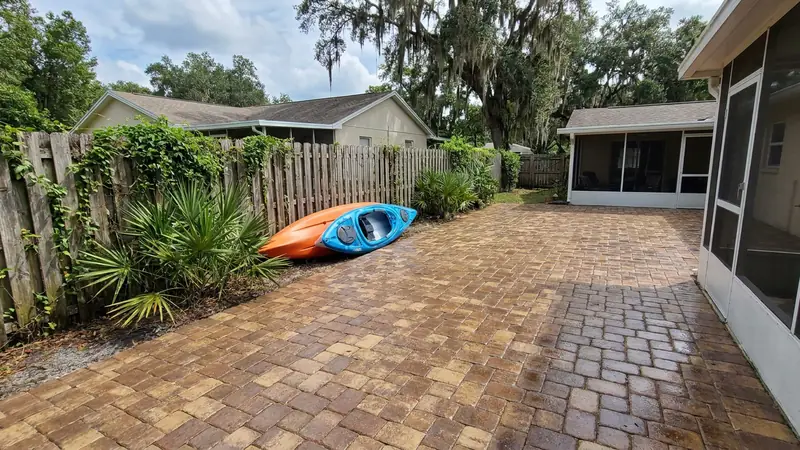
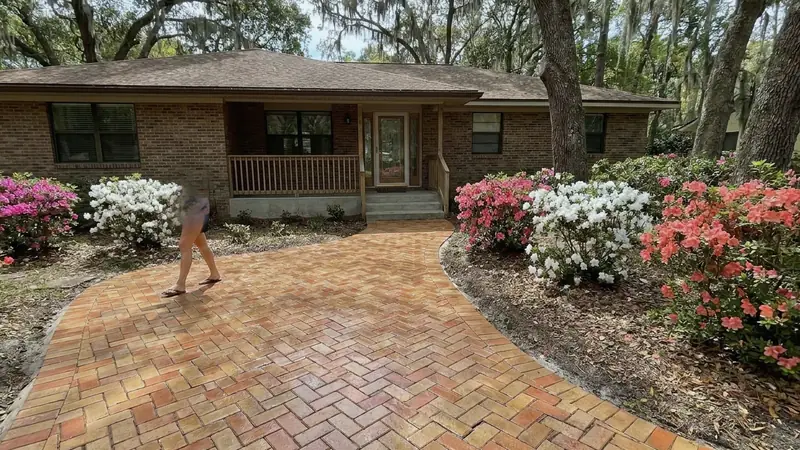
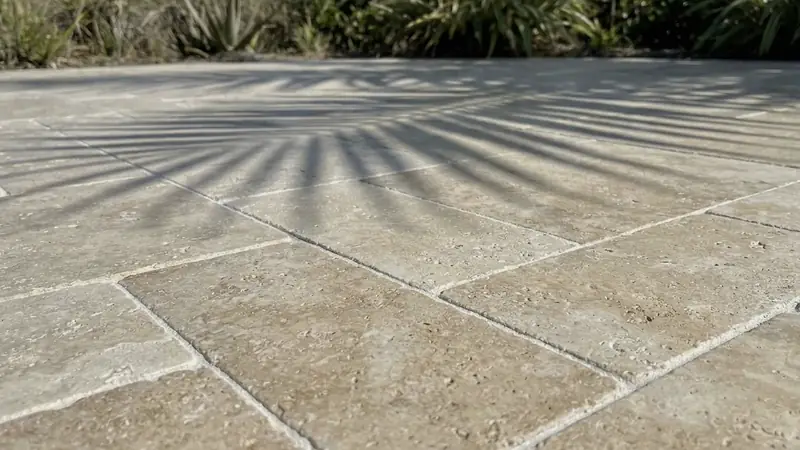
What do sealed pavers look like around Whitehouse?
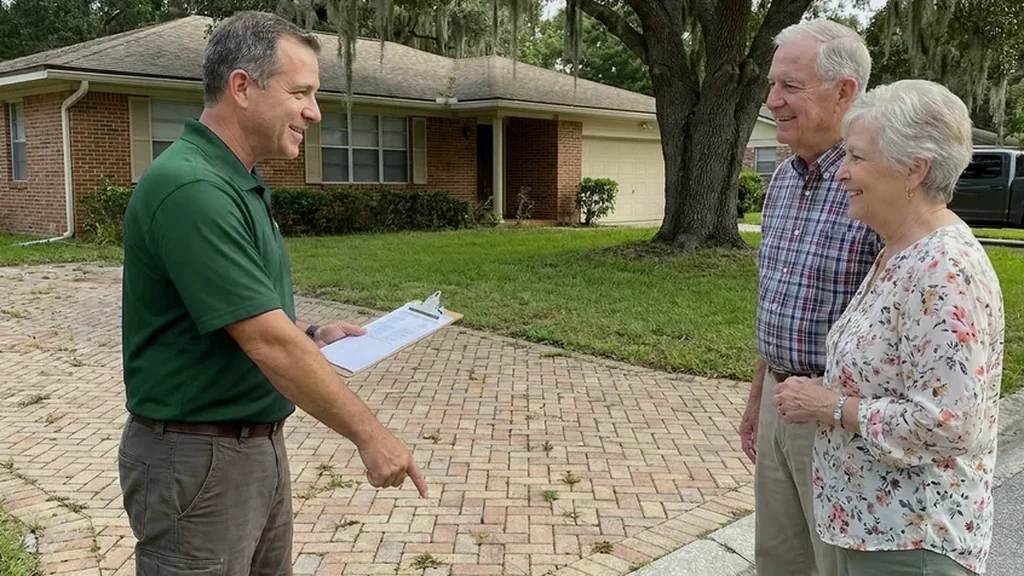
Why local matters in Whitehouse
A contractor who works the Westside plans for distance and access. A longer drive to your lot, a locked gate or a long driveway all change how a day is scheduled, because the crew needs a clear path for its equipment. Saying so up front keeps the visit on track. To reach one who covers Whitehouse, call (904) 736-4863.
Local knowledge also covers the ground itself. Sandy soil and heavy summer rain empty joints, and irrigation water can leave orange rust at the edges. A contractor used to this area checks for both before quoting, along with any low spots where water stands after a storm. To ask how, ask for a free estimate.
Whitehouse mixes older and newer homes, and many were built between 1970 and 1999. That means pavers may have been added later, with a sealer history nobody wrote down. A contractor who sees that often asks about the past coat first. ask for a free estimate and say when your pavers were laid, if you know.
What are the landmarks around Whitehouse?
Camp Milton Historic Preserve, Whitehouse Park and the former Cecil Field lands are the places most neighbors know. The preserve is at 1225 Halsema Road North, where soldiers built three miles of earth and timber fortifications along McGirts Creek in early 1864. A 15-mile paved trail passes through it, and the state bought the first tract in 1981. If you live near the preserve, ask for a free estimate.
Naval Air Station Cecil Field began as an outlying field in 1941 and closed in 1999, and about 2,500 of its acres were at the outlying field in Whitehouse. Whitehouse Park and Whitehouse Elementary anchor the neighborhood itself, so near any of these landmarks, call (904) 736-4863 and give your road.
Frequently Asked Questions
What does it cost to clean and seal pavers in Whitehouse?
The published range across this region is $1.75 to $3.25 per square foot to clean, sand and seal. Whitehouse jobs often cover a large area, which can lower the cost per foot, because setup time is spread over more surface. Ask how many square feet the quote covers, then check the multiplication.
Is sealing pavers a good idea in Florida, and in Whitehouse?
Usually, yes. Sealer slows fading, helps hold joint sand and keeps dirt on the surface, which matters where storms empty joints. A Jacksonville company says sinking and washouts are the main reason pavers fail, and sand held in place helps with that.
Which paver sealer suits Florida weather?
No single product fits every lot. Film-forming acrylics sit on the surface and stabilize joint sand, while penetrating silane or siloxane products soak in and leave the look unchanged. The old coat decides what can go on, since water-based sealer cannot go over solvent-based sealer. Ask the contractor to name the product and say why.
How long do paver sealers last in Whitehouse?
Quotes in this area run two to five years between coats. Full-sun driveways come due around 18 to 24 months and shaded walks around 24 to 36, according to a Jacksonville company. When a paver darkens as water soaks into it, the coat has given out.
Why do my Whitehouse pavers keep losing joint sand?
Heavy summer rain and sandy ground are the usual causes. Jacksonville sees about 52 inches of rain a year, with most of it from May to September. When joints open up, soil drifts in and weeds take hold. Sealing after new sand goes in helps the sand stay put.
Can rust stains from sprinklers be removed before sealing?
Often, but not always. Orange stains show up where iron-heavy irrigation water lands, UF/IFAS says. Rust gets treated ahead of the coat, because sealer would hold it in place. Some marks may not come out fully.
Is a long driveway cheaper per square foot to seal in Whitehouse?
Often, yes. A Jacksonville cost guide says larger projects get a better rate per square foot because setup is spread over more surface. The price still sits inside the published range, and gates, stairs and tight spots add time.
How soon can I get a paver sealing estimate in Whitehouse?
A local contractor gets back to you within 1 business day, and usually much sooner. Describe your driveway, patio or pool deck, give your road and mention any gate or long drive. The contractor measures first, then quotes by the square foot, and you decide whether to go ahead.
What does sealing do for pavers on a long Whitehouse driveway?
Sealing protects color, helps hold joint sand and keeps oil and dirt on the surface instead of in it. On a big area, that means fewer weeds in the joints and an easier rinse. It does not fix sunken sections, which are repaired first.
Do pavers on a Whitehouse patio need different care than a driveway?
Usually a little, because a patio holds water longer and gets less tire wear. Shaded patio corners stay damp and go green first, and one Jacksonville company puts shaded patios and walkways at 24 to 36 months between seals. Driveways in full sun run closer to 18 to 24 months.
When can cars go back on a freshly sealed Whitehouse driveway?
About a day later, one Jacksonville company says, with light foot traffic fine after a few hours. Heat, rain and the product shift the timing, so the contractor names a time when the job is done.
Ready for a Free Estimate in Whitehouse?
Call (904) 736-4863 and tell us about your pavers.
Free, no obligation