
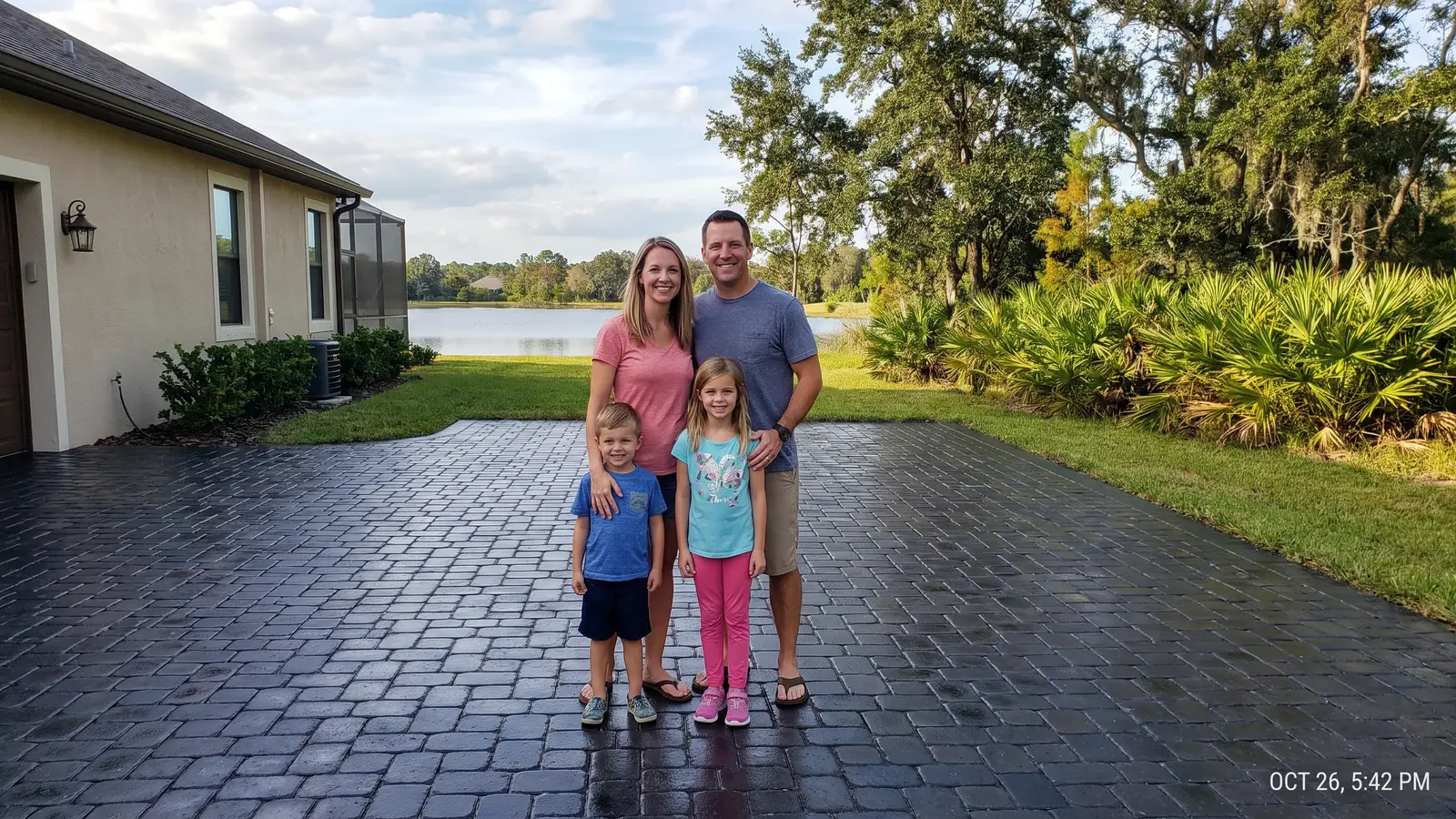
Paver sealing for Riverside homes
Paver Sealing in Riverside, FL
Give your Riverside bungalow's oak-shaded walkway and patio a fresh start, free estimate at (904) 736-4863.
- Brings out deeper paver color
- Fresh joint sand helps lock pavers in place
- Gives weeds less room to grow
- Makes the surface easier to keep clean
- Free estimate, no obligation
Request a Free Estimate
Free, no obligation.
Fast, careful paver sealing in Riverside
Paver sealing is available across Riverside, from the bungalow blocks near Five Points to the streets beside Memorial Park. A local contractor can wash, re-sand and seal your driveway, walkway, patio or pool deck, with a free estimate first. Reply time after you ask for a free estimate is 1 business day at most, and usually much sooner.
Picture the walk to your front porch with green streaks where the oaks drip, and joints gone dark or empty. After a wash, new sand and a fresh coat, those same pavers read as one clean color again. Describe yours when you call (904) 736-4863, and ask for the no-obligation estimate, which covers every surface you list.
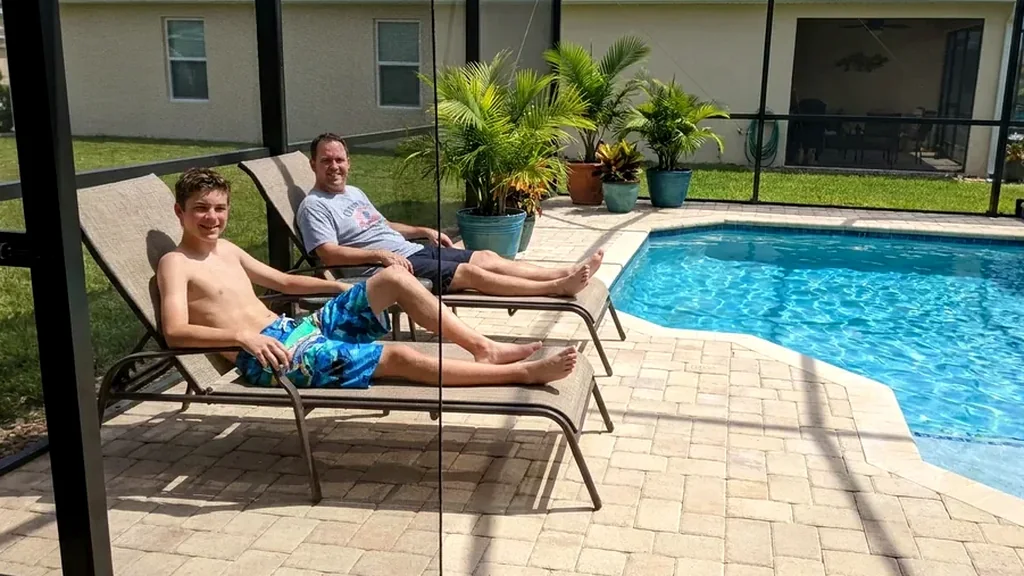
Why hire a local paver sealing contractor in Riverside?
Riverside homeowners lean on a local paver contractor because historic-district rules, old oaks and a tidal river all change how a job should go. To talk about your street, ask for a free estimate.
A free look at your yard
The contractor walks your Riverside property at no charge and quotes a price before anything is agreed. You decide after you see the number.
A range you can check
The published range here is $1.75 to $3.25 per square foot to clean, sand and seal. Compare any Riverside quote against it.
A finish that fits an old house
Matte sits quietly beside a Craftsman porch or a Prairie style front. A wet look adds shine but shows scuffs sooner.
Your call on the work
You pick the date, the finish and whether to go ahead. A Riverside estimate comes with no obligation to hire anyone.
Get Your Free Estimate in Riverside
Tell us about your pavers in Riverside.
Free, no obligation
What paver problems show up most in Riverside?
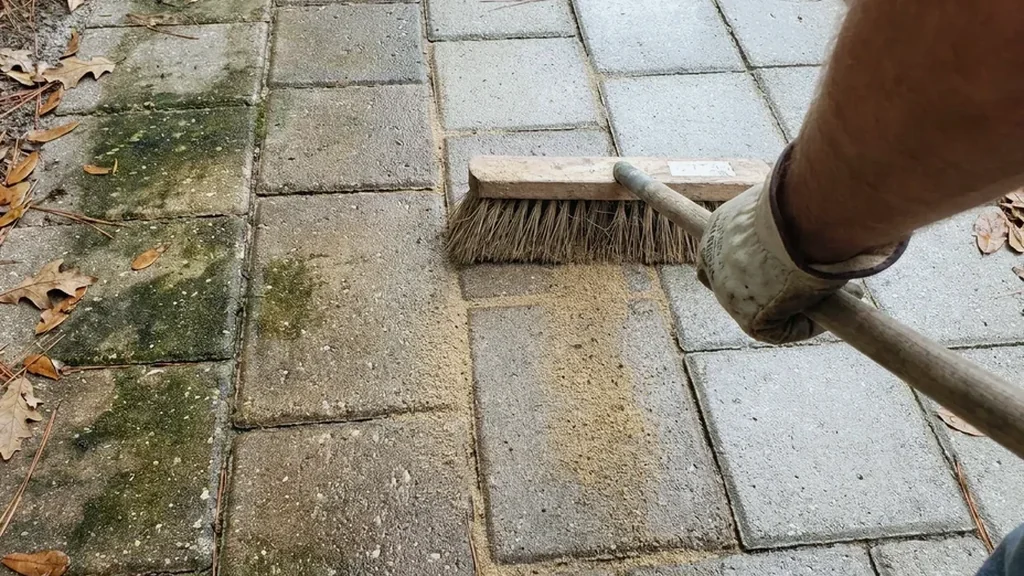
Oak drip and green streaks on shaded walkways
Moss and algae tend to take hold on pavers only where heavy shade keeps them damp. Riverside has that kind of shade, because the American Planning Association says moss-draped oaks line its streets. Much of the canopy is laurel and water oak planted after World War II, and those trees typically live about 60 to 70 years. A walkway under old branches stays wet longer after each rain, which means green film returns first on the shady side. Sealing helps because a coated surface sheds dirt more easily, though shade will still bring some growth back over time.
Joints that empty on sandy ground
Jacksonville gets about 52 inches of rain a year, most of it from May to September in short, heavy downpours. The USDA describes the Ortega soil series, first mapped in Duval County, as fine sand more than 80 inches deep. Sand drains fast, and storms can wash the sand out of the joints above it. Once joints open, soil drifts in and weeds follow, so refilling comes before any coat. A Riverside driveway that keeps losing sand after storms is showing you this at work.
Chlorine splash-out on pool decks
Pool decks in Riverside collect chlorinated splash-out that dries white, one Jacksonville paver company reports. It puts decks with chlorine or salt systems at roughly 18 to 24 months between seals. Pool water also keeps the deck edge wet for long stretches. A pale band near the coping is worth pointing out to the contractor. It tells them where the deck gets the most splash and where to look closely.
An old coat nobody remembers
About 45 percent of the housing in ZIP 32205, which holds much of Riverside, is renter-occupied, per the 2020 Census. That means a paver surface may have had several caretakers, and the last coat may be a mystery. A water-based sealer cannot go over a solvent-based one, so the contractor has to learn what is already on the surface. A landlord or a new owner can simply say what is known. Even a guess about the year helps.
Sunken spots beside old roots
A Jacksonville company says sealing preserves any sunken or lifted section, so those spots are reset first. Sandy ground and nearby trees can both let a paver settle. Small bungalow lots tend to put walkways close to older oaks. Walk your pavers before the visit and note every low spot you see. Tell the contractor about any spot where a chair leg or a stroller wheel catches.
Do Riverside's historic rules affect a paver sealing job?
Possibly, because the city requires a Certificate of Appropriateness for exterior work in a local historic district, and it lists driveways as an example of site work. Riverside Avondale became a local district in 1998 and protects about 4,200 contributing structures. Many small projects are handled by city staff in up to a few weeks with no public hearing. The city page does not name sealing, so look up your address on the Land Development Map, then ask for a free estimate.
Riverside covers blocks that look different from one another. Near Five Points, the Sun-Ray Cinema opened in 1927 as the Riverside Theater. Toward the river, wealthy families built mansions after the 1901 fire, while modest bungalows filled in further inland. Tell the contractor which kind of street you live on when you call (904) 736-4863.
Parks shape the blocks too. Riverside Park opened in 1895, the Olmsted firm developed Memorial Park in 1919, and Willowbranch Park began development in 1916 with azaleas added around 1924. A street that faces a park often sits under older trees, so shade and drip are the first things to describe. Share that when you ask for a free estimate.
What does paver sealing cost in Riverside?
Around Northeast Florida, clean, sand and seal pricing is published at $1.75 to $3.25 per square foot. Where a Riverside job lands in that range depends on shade growth, empty joints and any old coat that must come off first. Failed sealer has to be stripped before a new coat, which adds work. For a figure that fits your property, ask for a free estimate, and the estimate is free.
Small jobs cost more per foot because setup time barely shrinks with the size of the surface. A front walk or a tiny courtyard behind a bungalow can fall into that group, and some companies set minimum job sizes. Pairing the walk with a driveway or patio can spread that setup. Call (904) 736-4863 and ask which mix of surfaces makes sense for your lot.
| Paved area | Typical example | Clean, sand and seal |
|---|---|---|
| 300 sq ft | Small patio or walkway | $525 to $975 |
| 600 sq ft | Two car driveway | $1,050 to $1,950 |
| 1,000 sq ft | Large driveway or pool deck | $1,750 to $3,250 |
| 1,500 sq ft | Driveway plus pool deck | $2,625 to $4,875 |
Math based on the $1.75 to $3.25 per square foot that Northeast Florida paver companies publish. Your contractor sets the actual price after seeing the surface. Repairs, leveling and stripping failed sealer are usually extra.
How does a paver sealing job work in Riverside?
Walk the lot and read the surface
The contractor looks at how your Riverside pavers drain, where oak shade keeps them wet and which spots have sunk. Sunken or lifted sections are reset first, since sealer preserves whatever it covers. Pool decks get a look for the white splash-out band. If an old coat is present, the contractor needs to find out what type it is. That answer decides which sealer can follow it.
Wash the surface clean
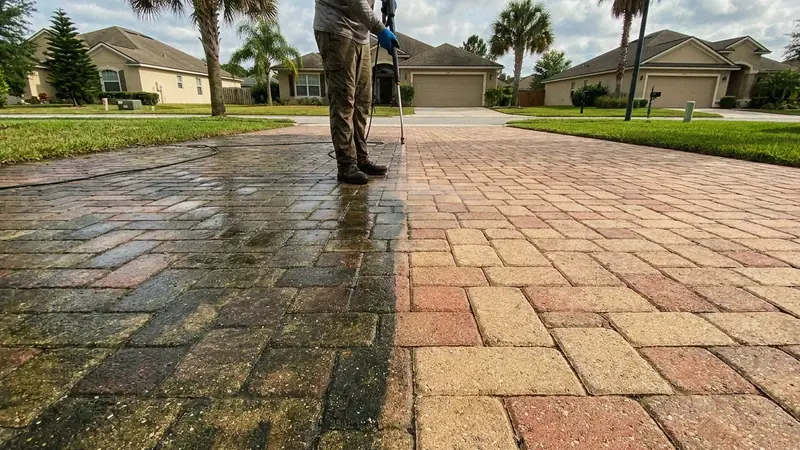
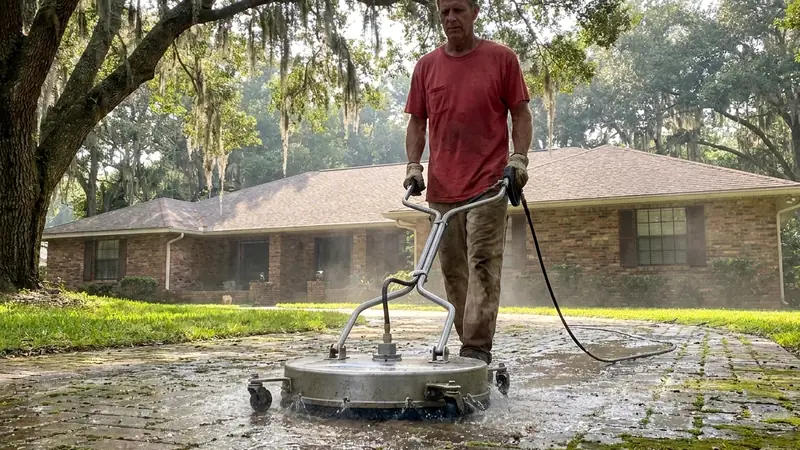
Washing removes green film, oak drip and stains. Hard pressure can loosen joints and dislodge sand, so a careful contractor keeps it controlled. Rust and oil marks get treated at this stage and may not come out fully. Rinse water is kept away from wood porch steps and older masonry where the pavers meet the house.
Put fresh sand in the joints
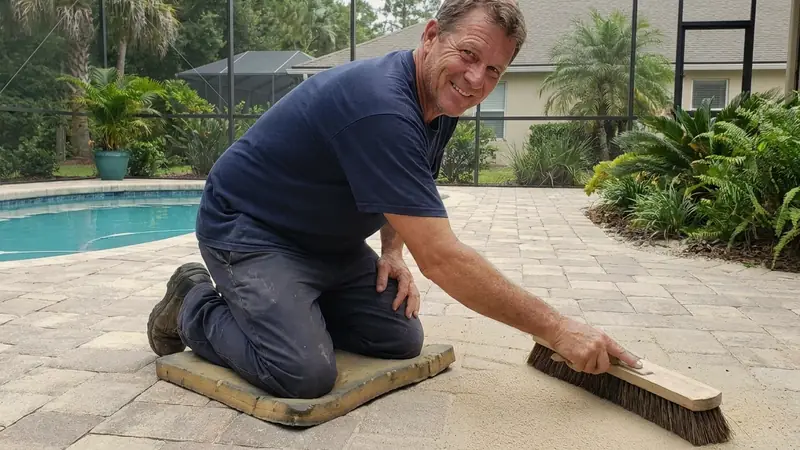
Washing pulls out joint sand, so the joints are filled again before any sealing. In Riverside's sandy ground, open joints let soil in and give weeds a start. The new sand is swept in and the surface is cleared. Expect extra time here if the joints have been low for years. The sand that goes in should match the look of the pavers.
Let everything dry
Sealer needs a dry surface, and sealing damp pavers is a common reason a coat turns white or blotchy. Companies often allow 24 to 48 hours after cleaning, and a shaded Riverside walkway may need longer. The contractor may also shift the day around a summer storm. A day of patience beats a second visit to fix a cloudy coat. Once the surface passes as dry, the work moves on the same day.
Seal, then keep off
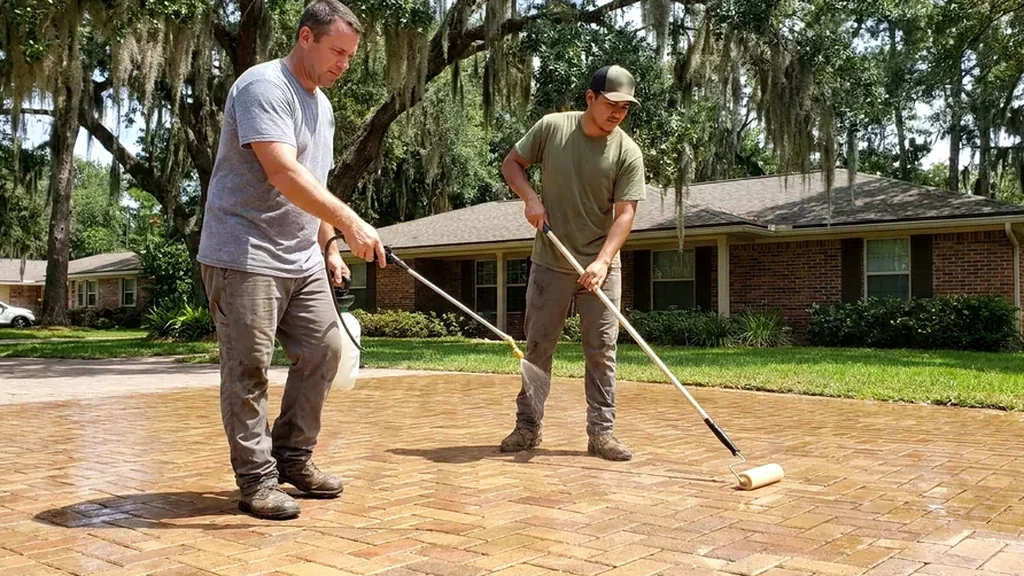
Professionals typically spray the sealer and then back-roll it, so it works into the joints and does not puddle. Your matte or wet look goes on as agreed. Walking is usually fine within a few hours, while cars stay off for roughly a day, depending on the product and weather. Later, a drop of water that beads shows the coat is working.
Complete paver services in Riverside
A Riverside job runs in a fixed order: wash, re-sand, dry, then seal. Washing clears oak drip and green film, and fresh sand goes back into clean joints. Sealer comes last, so nothing dirty gets trapped under it. To hear how long each stage takes on your lot, call (904) 736-4863.
Front walks sit under the heaviest shade, so they turn green first, while driveways carry tires and pool decks collect chlorine splash-out that dries white. Backyard patios fall somewhere between the two, depending on how much canopy hangs over them. Tell the contractor which surfaces you have when you ask for a free estimate.
Sealer choice starts with what is already on the surface, because water-based sealer cannot go over solvent-based sealer. After that you pick matte or wet look. Matte keeps a bungalow porch looking natural, while a wet look deepens color but shows scuffs sooner. To talk it through for your house, call (904) 736-4863.
Sealer needs a dry surface, and Jacksonville rain is concentrated from May to September. One local company puts shaded patios at 24 to 36 months between seals and chlorine pool decks at 18 to 24, so ask which one yours is. A damp walkway can push the date back a day or two. For a date that fits your block, ask for a free estimate.
Questions to ask before you hire
- Where the pavers have sunk, do they get lifted and leveled first?
- Is the sand between the pavers polymeric, and when does it harden?
- Do you recommend a matte, satin or wet look finish for pavers like mine?
- How do you protect my shrubs, lawn and pool edge from overspray?
- My irrigation water leaves orange stains. Can those come out first?
- How many coats of sealer will my driveway get?
- My HOA approved a certain look. Can the finish match it?
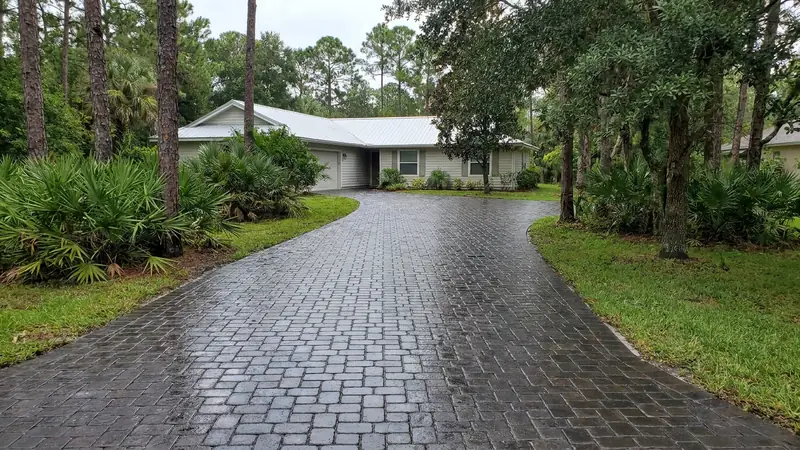
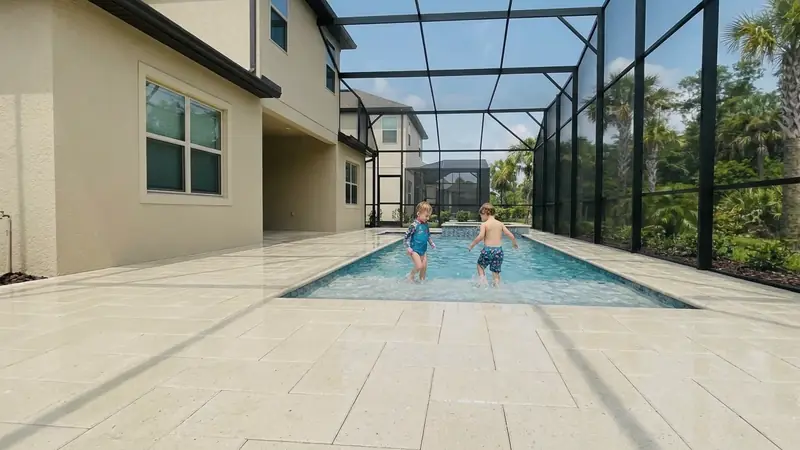
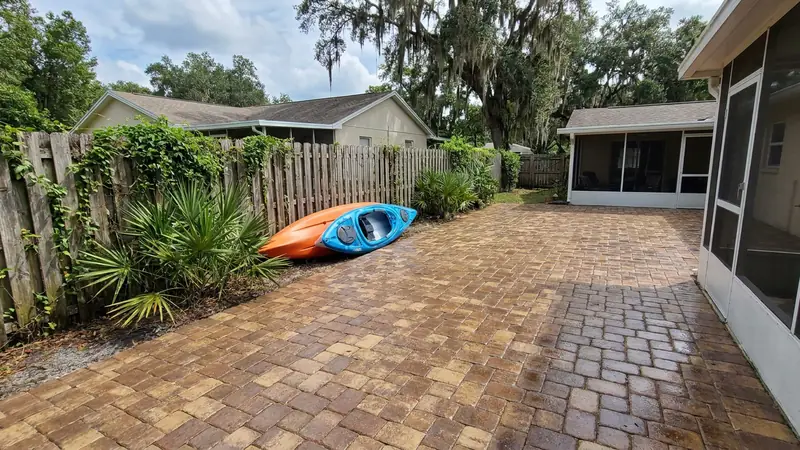
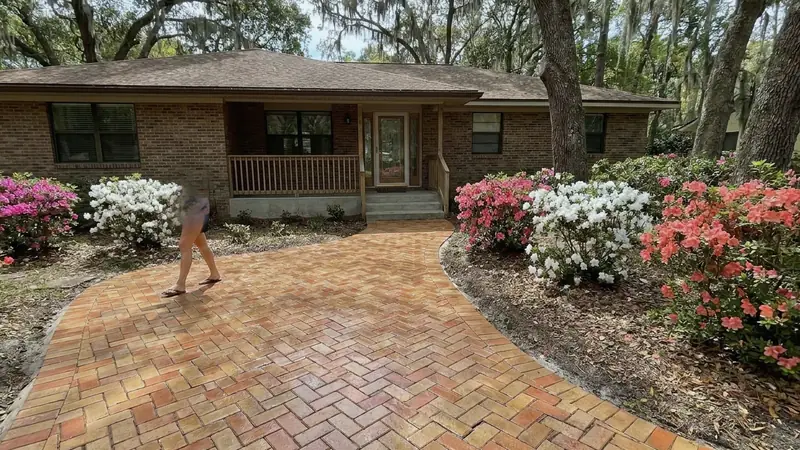
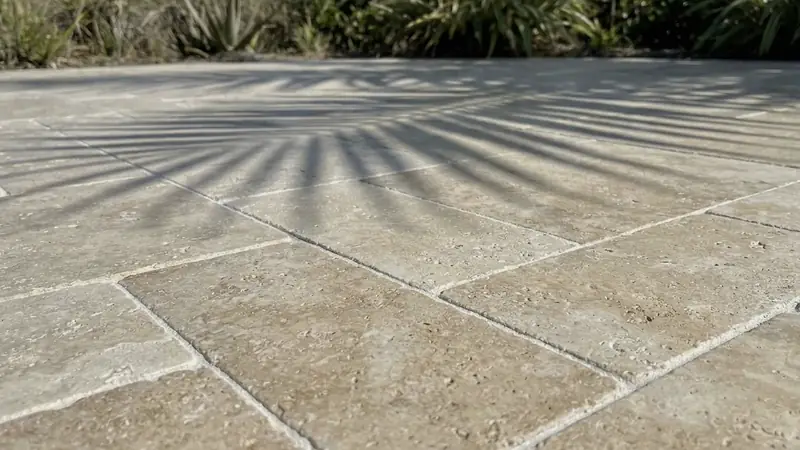
What do sealed pavers look like around Riverside?
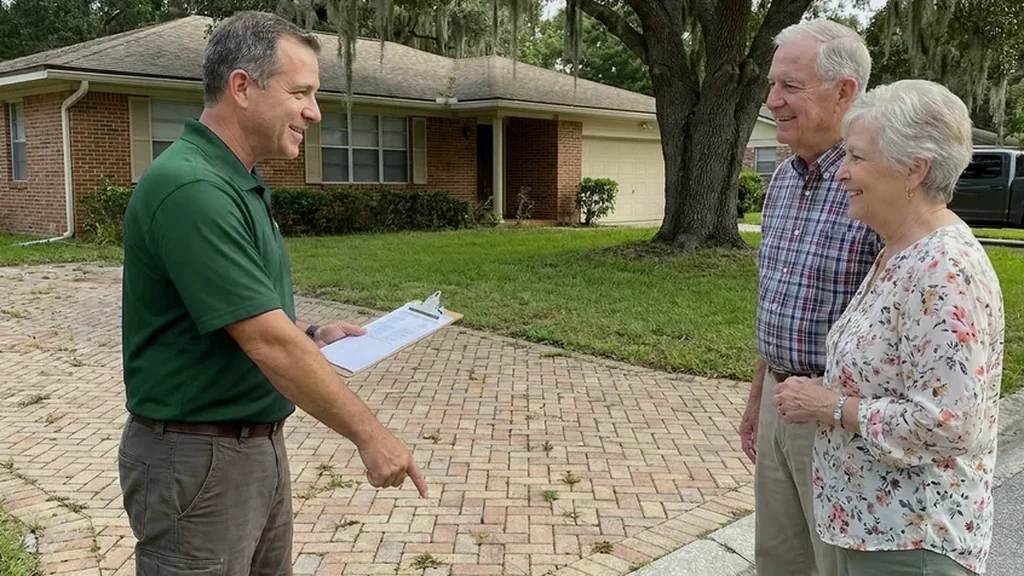
Why local matters in Riverside
A contractor who works Riverside regularly will ask about your tree cover before anything else, since oak drip and a damp north side shape the wash. They will also ask if your address falls inside the historic district. Neither question comes up on a job across town. To talk with someone who knows these blocks, call (904) 736-4863.
Timing is local too. Jacksonville gets most of its rain from May to September in short, heavy bursts, so a Riverside job often moves around the forecast. A walkway under old oaks needs longer to dry than a driveway in full sun. Ask how the contractor plans for that when you ask for a free estimate.
Riverside houses vary more than most. The American Planning Association counts 15 architectural styles in Riverside Avondale, including Craftsman, Tudor Revival and Prairie. A contractor used to working beside wood porches and older masonry knows to keep rinse water controlled near them, and to ask what the porch floor is made of. If that sounds like your house, ask for a free estimate and mention roughly when it was built; hiring is optional.
Is Riverside old enough that its pavers need special care?
A little, because the ground around your pavers has a long history. Riverside was platted in 1868, annexed in 1887, and grew most between the 1901 fire and the 1920s land boom. Early 1900s homes were often simple bungalows, and many of Jacksonville's bungalows stand in Riverside. If you have a walkway beside one, ask for a free estimate.
The landmarks show why shade matters here. Memorial Park sits on the river and Riverside Park dates to 1895. Willowbranch Park follows its creek, and the Cummer Museum of Art and Gardens, founded in 1961, is in the neighborhood. Close to any of them, call (904) 736-4863 and give your cross street.
Frequently Asked Questions
What do I pay per square foot for paver sealer in Riverside?
Expect $1.75 to $3.25 per square foot for cleaning, sanding and sealing, which is what companies in this region commonly publish. Shade growth, empty joints and failed old sealer move a Riverside job around inside that range. Have the quote list the total square footage, so you can check the math.
Is sealing pavers worth it in Riverside and the rest of Florida?
Yes, for most pavers, because sealer slows fading, holds joint sand and keeps dirt on the surface. One Jacksonville company says local sun fades unsealed concrete pavers noticeably in about 3 to 5 years. Oak shade and pool chlorine around Riverside add more reasons to keep a coat on.
Is it a good idea to pressure wash pavers in Riverside?
Only with care. One Jacksonville company warns that high pressure can loosen joints, wear the surface and knock out joint sand. A contractor controls the pressure, then re-sands the joints before sealing. Older Riverside pavers near wood steps also call for careful rinse water.
Will dish soap clean pavers before sealing?
Not for a sealing job. Suds can leave a film, and sealer locks in whatever is on the surface. A contractor washes with products made for pavers and rinses until the water runs clear.
Does Riverside's historic district require approval to seal pavers?
It can. The city requires a Certificate of Appropriateness for exterior work in local historic districts, and it lists driveways as an example of site work. The page does not name sealing, so a quick question to historic planning staff settles it. You can check your address on the city's Land Development Map.
How often do pavers in Riverside need sealing?
Expect a gap of two to five years between coats, going by what companies quote. One Jacksonville company puts shaded patios and walkways at 24 to 36 months, and chlorine or salt pool decks at 18 to 24. A drop of water that soaks in, not beads, shows the coat has worn.
How long should I stay off pavers after sealing?
A Jacksonville company says people can usually walk on it within a few hours and cars should wait about a day. The product and the weather change that, and shaded Riverside lots dry slower. Ask the contractor for a time that fits your sealer.
What drawbacks come with sealing pavers in Riverside?
The main downsides are upkeep and timing. Upkeep is the main cost: a coat wears out, and a wet look shows scuffs sooner than matte. It also needs a dry surface, so a shaded Riverside lot or a rainy week can push the date back.
How do I know my Riverside pavers are ready for a new coat?
Look for color that has faded, joints that have lost sand, green or black film that returns soon after a wash, and water that soaks in instead of beading. Any one of those is a reason to ask for an estimate. A contractor can tell you in person whether washing and re-sanding alone would do, or whether a coat is due.
Can pavers that were sealed before be sealed again?
Often yes, but the old coat matters. A water-based sealer will not go over a solvent-based one, and failed sealer may need stripping first, which adds cost. In Riverside, where pavers may have had several owners, share whatever you know about past work.
Nearby areas we serve
Ready for a Free Estimate in Riverside?
Call (904) 736-4863 and tell us about your pavers.
Free, no obligation